Filter Products-
-
Maturity
-
Maturity Days
-
Stalk Strength
-
Nemat/Caliente Rojo (Not Treated)
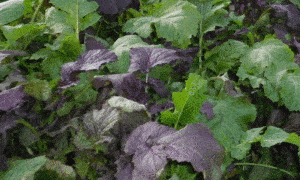
Price range: $58.05 USD through $430.00 USDLearn more →This is a blend of arugula and mustard (Brassica Juncea). Nemat is an arugula variety for trap crops or to suppress root-knot and cyst nematodes. Caliente Rojo is a Brassica juncea blend with the highest glucosinolate concentration available making it an effective biofumigant. Rojo is very vigorous (and the red color is attractive). Used together, they provide an especially effective biofumigant for nematode and wireworm suppression along with weed & disease reduction. The Nemat arugula is lower growing and is added because the root exudates are very attractive to nematodes and wireworms. This attracts these mobile pests closer to the surface, enhancing the biofumigation action of the Caliente Rojo.
Use the blend at 6-9 lb /acre.
-
Neptune Watermelon (Primed)
Price range: $38.54 USD through $1,240.74 USDLearn more →

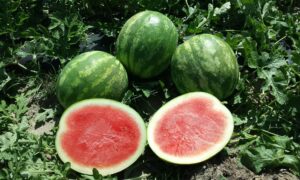
Neptune features consistent performance and sizing in the early-main season slot. Fruit is firm and has shown good shelf life.
-

New Ace Bell Pepper (Not treated Seed)
Price range: $40.08 USD through $182.60 USDLearn more →Bell type, medium thickness, 3 lobes. Excellent for forcing under glasshouse and also usable for open field.
CALL IN FOR 50M PACKS
-
New Ace Bell Pepper (Treated Seed)
Price range: $40.08 USD through $182.60 USDLearn more →Bell type, medium thickness, 3 lobes. Excellent for forcing under glasshouse and also usable for open field.
CALL IN FOR 50M PACKS
OUT OF STOCK SUB NOT TREATED SKU 8907NT
-
New England Cheddar Pumpkin (Farmore)
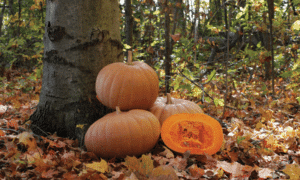
Price range: $22.50 USD through $1,390.50 USDLearn more →Ornamental and edible, New England Cheddar produces tan fruit with light ribbing. Interior is dark colored, like a butternut, and can be used in the same way that butternuts are used in cooking. Tan color makes a nice addition to mixed bins.
-

New Moon Pumpkin (Treated Seed)
Price range: $49.76 USD through $7,613.10 USDLearn more →New Moon white pumpkin is uniform in shape and size. Smooth round shape with shallow sutures. Holds white color well without turning yellow (as fast as other white varieties). This pumpkin has very dense flesh and so is quite heavy for its size. Full vine item.
CROP FAILURE – SUB POLAR BEAR 3102
-

New Red Fire Lettuce (Not Treated Seed)
Price range: $13.10 USD through $404.00 USDLearn more →
The key to New Red Fire’s long-standing success is that it has a good combination of color, vigor, and weight. It is slow-bolting and uniform.
-
New Red Fire Lettuce (Not Treated/Organic Pelleted & Primed)
Price range: $5.25 USD through $1,050.00 USDLearn more →The key to New Red Fire’s long-standing success is that it has a good combination of color, vigor, and weight. It is slow-bolting and uniform.
-
New Red Fire Lettuce (Organic)
Price range: $17.70 USD through $544.00 USDLearn more →
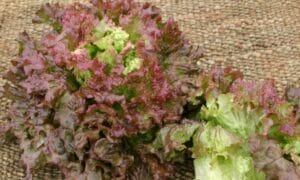
The key to New Red Fire’s long-standing success is that it has a good combination of color, vigor, and weight. It is slow-bolting and uniform.
-

New Red Fire Lettuce (Primed & Pelleted Seed)
Price range: $5.50 USD through $1,100.00 USDLearn more →Loose leaf with luminous bright color. Full frilly center, holds color well, slow-bolting.
-

Niala (VM18011915) Melon (Not Treated)
Price range: $28.31 USD through $788.00 USDLearn more →Canary melon offered for growers looking for consistently larger fruit; 1915 averages fruit in the 5-8 lb range. 1915 is an earlier maturing variety and shows the traditional “wrinkled” rind typical of canary melons.
-
Niala (VM18011915) Melon (Treated Seed)
Price range: $28.31 USD through $788.00 USDLearn more →Canary melon offered for growers looking for consistently larger fruit; 1915 averages fruit in the 5-8 lb range. 1915 is an earlier maturing variety and shows the traditional “wrinkled” rind typical of canary melons.